RVs
How many amp hours to run an RV furnace and fridge overnight?
About 111 Ah for a 12-hour night with, for example, a Suburban SF-30 furnace (8.5 A with the 3-inch motor, in Suburban’s 2007 service manual) running half the time and a 12-volt fridge. That is two batteries of 100 Ah LiFePO4, if you plan to use 90% of each. A small NT furnace needs much less; an SF-42 on a cold night much more.
The math
Amp-hours = amps × the share of the time it runs × hours. For the example above:
- Furnace: 8.5 A × 0.5 × 12 h = 51 Ah.
- Fridge: 10 A × 0.5 × 12 h = 60 Ah.
- Together: 111 Ah. At 12.8 V, the nominal voltage of a LiFePO4 battery, that is 1,421 Wh.
- Batteries: 111 Ah ÷ 90 Ah usable per 100 Ah battery = 1.23, rounded up to two.
The furnace amps are from Suburban’s 2007 service manual (Suburban (2007 manual, ATC Trailers copy), pp. 21–22). Current models may draw differently, so check your furnace’s label or manual. The fridge figure is from Go Power!, as RVtravel reported it: “Your average 12-volt fridge draws 10 amps when running, and they run about 50% of the time” (RVtravel).
Our assumptions: how much of the night the furnace runs. We show 25%, 50% and 75%; the real figure depends on the outside temperature, the RV’s insulation and the thermostat setting. And 90% usable from each 100 Ah LiFePO4 battery is our planning figure, not a maker’s; use your battery maker’s figure if it gives one. For watt-hours we use 12.8 V, a LiFePO4 battery’s nominal voltage.
Furnace and fridge together, 12-hour night
| Suburban furnace (12 V draw) | Furnace runs 25% | Runs 50% | Runs 75% |
|---|---|---|---|
| NT-12S, NT-16S, NT-20S (2.8 A) | 68.4 Ah · 876 Wh · 1 battery | 76.8 Ah · 983 Wh · 1 battery | 85.2 Ah · 1,091 Wh · 1 battery |
| NT-24SP (3.5 A) | 70.5 Ah · 902 Wh · 1 battery | 81 Ah · 1,037 Wh · 1 battery | 91.5 Ah · 1,171 Wh · 2 batteries |
| NT-30SP (5.5 A) | 76.5 Ah · 979 Wh · 1 battery | 93 Ah · 1,190 Wh · 2 batteries | 109.5 Ah · 1,402 Wh · 2 batteries |
| NT-34SP (7.5 A) | 82.5 Ah · 1,056 Wh · 1 battery | 105 Ah · 1,344 Wh · 2 batteries | 127.5 Ah · 1,632 Wh · 2 batteries |
| NT-40 (9.5 A) | 88.5 Ah · 1,133 Wh · 1 battery | 117 Ah · 1,498 Wh · 2 batteries | 145.5 Ah · 1,862 Wh · 2 batteries |
| SF-20, SF-25, SF-30, 2.5 in. motor (6.5 A) | 79.5 Ah · 1,018 Wh · 1 battery | 99 Ah · 1,267 Wh · 2 batteries | 118.5 Ah · 1,517 Wh · 2 batteries |
| SF-20, SF-25, SF-30, 3 in. motor (8.5 A) | 85.5 Ah · 1,094 Wh · 1 battery | 111 Ah · 1,421 Wh · 2 batteries | 136.5 Ah · 1,747 Wh · 2 batteries |
| SF-35, 2.5 in. motor (8.5 A) | 85.5 Ah · 1,094 Wh · 1 battery | 111 Ah · 1,421 Wh · 2 batteries | 136.5 Ah · 1,747 Wh · 2 batteries |
| SF-35, 3 in. motor (9.4 A) | 88.2 Ah · 1,129 Wh · 1 battery | 116.4 Ah · 1,490 Wh · 2 batteries | 144.6 Ah · 1,851 Wh · 2 batteries |
| SF-42 (11.5 A) | 94.5 Ah · 1,210 Wh · 2 batteries | 129 Ah · 1,651 Wh · 2 batteries | 163.5 Ah · 2,093 Wh · 2 batteries |
Furnace amps × share of the time it runs × hours, plus the fridge at 10 A × 50% × hours (40 Ah for 8 hours, 60 Ah for 12). Wh = Ah × 12.8 V (LiFePO4 nominal). Batteries: 100 Ah LiFePO4 at 90% usable (90 Ah each), rounded up. The furnace’s share of running time and the 90% are our assumptions; the amps are from Suburban’s 2007 manual and Go Power!.
Furnace and fridge together, 8-hour night
| Suburban furnace (12 V draw) | Furnace runs 25% | Runs 50% | Runs 75% |
|---|---|---|---|
| NT-12S, NT-16S, NT-20S (2.8 A) | 45.6 Ah · 584 Wh · 1 battery | 51.2 Ah · 655 Wh · 1 battery | 56.8 Ah · 727 Wh · 1 battery |
| NT-24SP (3.5 A) | 47 Ah · 602 Wh · 1 battery | 54 Ah · 691 Wh · 1 battery | 61 Ah · 781 Wh · 1 battery |
| NT-30SP (5.5 A) | 51 Ah · 653 Wh · 1 battery | 62 Ah · 794 Wh · 1 battery | 73 Ah · 934 Wh · 1 battery |
| NT-34SP (7.5 A) | 55 Ah · 704 Wh · 1 battery | 70 Ah · 896 Wh · 1 battery | 85 Ah · 1,088 Wh · 1 battery |
| NT-40 (9.5 A) | 59 Ah · 755 Wh · 1 battery | 78 Ah · 998 Wh · 1 battery | 97 Ah · 1,242 Wh · 2 batteries |
| SF-20, SF-25, SF-30, 2.5 in. motor (6.5 A) | 53 Ah · 678 Wh · 1 battery | 66 Ah · 845 Wh · 1 battery | 79 Ah · 1,011 Wh · 1 battery |
| SF-20, SF-25, SF-30, 3 in. motor (8.5 A) | 57 Ah · 730 Wh · 1 battery | 74 Ah · 947 Wh · 1 battery | 91 Ah · 1,165 Wh · 2 batteries |
| SF-35, 2.5 in. motor (8.5 A) | 57 Ah · 730 Wh · 1 battery | 74 Ah · 947 Wh · 1 battery | 91 Ah · 1,165 Wh · 2 batteries |
| SF-35, 3 in. motor (9.4 A) | 58.8 Ah · 753 Wh · 1 battery | 77.6 Ah · 993 Wh · 1 battery | 96.4 Ah · 1,234 Wh · 2 batteries |
| SF-42 (11.5 A) | 63 Ah · 806 Wh · 1 battery | 86 Ah · 1,101 Wh · 1 battery | 109 Ah · 1,395 Wh · 2 batteries |
Furnace amps × share of the time it runs × hours, plus the fridge at 10 A × 50% × hours (40 Ah for 8 hours, 60 Ah for 12). Wh = Ah × 12.8 V (LiFePO4 nominal). Batteries: 100 Ah LiFePO4 at 90% usable (90 Ah each), rounded up. The furnace’s share of running time and the 90% are our assumptions; the amps are from Suburban’s 2007 manual and Go Power!.
The furnace alone, in amp-hours
| Suburban furnace | 12 V draw | 8 h, 25% | 8 h, 50% | 8 h, 75% | 12 h, 25% | 12 h, 50% | 12 h, 75% |
|---|---|---|---|---|---|---|---|
| NT-12S, NT-16S, NT-20S | 2.8 A | 5.6 | 11.2 | 16.8 | 8.4 | 16.8 | 25.2 |
| NT-24SP | 3.5 A | 7 | 14 | 21 | 10.5 | 21 | 31.5 |
| NT-30SP | 5.5 A | 11 | 22 | 33 | 16.5 | 33 | 49.5 |
| NT-34SP | 7.5 A | 15 | 30 | 45 | 22.5 | 45 | 67.5 |
| NT-40 | 9.5 A | 19 | 38 | 57 | 28.5 | 57 | 85.5 |
| SF-20, SF-25, SF-30, 2.5 in. motor | 6.5 A | 13 | 26 | 39 | 19.5 | 39 | 58.5 |
| SF-20, SF-25, SF-30, 3 in. motor | 8.5 A | 17 | 34 | 51 | 25.5 | 51 | 76.5 |
| SF-35, 2.5 in. motor | 8.5 A | 17 | 34 | 51 | 25.5 | 51 | 76.5 |
| SF-35, 3 in. motor | 9.4 A | 18.8 | 37.6 | 56.4 | 28.2 | 56.4 | 84.6 |
| SF-42 | 11.5 A | 23 | 46 | 69 | 34.5 | 69 | 103.5 |
Amp draw at 12 V DC as printed in Suburban’s 2007 service manual, page 21 (NT) and page 22 (SF), copy hosted by ATC Trailers. Current models may draw differently; check your furnace’s label or manual. Where the manual gives two figures, one is for the 2.5-inch and one for the 3-inch blower motor. Amp-hours = amps × share of the time running × hours; the shares are our assumption.
In the same RVtravel answer, Dave Solberg writes: “The heater will be the big draw, as most draw 10-12 amps, which would be similar to the refrigerator” (RVtravel). Suburban’s 2007 table shows how much that varies: 2.8 A for the smallest NT models, 11.5 A for the SF-42.
A low battery stops the furnace
An RV furnace burns propane, but its blower and controls run on 12 V DC. Suburban’s 2007 manual says its furnaces are “designed for use with Propane gas” and lists the DC supply as “Minimum 10.5 volts D.C., Maximum 13.5 volts D.C.” Its 520820 module board “constantly checks for a minimum 9.5 volts”; below that it goes “into a stand by mode until adequate power is supplied” (Suburban (2007 manual, ATC Trailers copy), pp. 3 and 24). So with that board, a flat battery means no heat even with a full propane tank; check your furnace’s manual for its own limits. Plan with the battery count in the tables, not the bare amp-hours, and add the lights, water pump and anything else that runs at night.
Safety
Suburban’s 2007 manual explains that an obstruction in the vent or main burner cuts the combustion air, “which results in incomplete combustion”, and that “the by-products are carbon monoxide (CO) and soot”. If black soot forms at the outside exhaust vent, it says, the furnace “should not be operated until the problem is corrected”. It also says not to vent the furnace into an enclosed porch or where the vent is covered or obstructed (Suburban (2007 manual, ATC Trailers copy)). Follow your furnace’s own manual for service and venting.
With a portable power station
To size a power station rather than batteries, use the watt-hours: 111 Ah is about 1,421 Wh at 12.8 V, before the station’s own losses in making 12 V. If the furnace and fridge run from a station’s 12 V car outlet, check that outlet’s amp rating in the station’s manual: when both run at once they draw their full current together, 8.5 A + 10 A = 18.5 A in the example. Our station data doesn’t include each 12 V outlet’s rating yet, so for runtimes use the calculator, the 12 V fridge guide and the Ah to Wh converter.
Quick answers
How many amp hours does an RV furnace and fridge use overnight?
About 111 Ah for 12 hours with a Suburban SF-30 (3-inch motor, 8.5 A in Suburban’s 2007 service manual) running half the time and a 12-volt fridge: 51 Ah for the furnace and 60 Ah for the fridge. That is two batteries of 100 Ah LiFePO4 at the 90% we plan to use from each. A small NT-12S at the same share needs about 77 Ah; an SF-42 running three quarters of the night about 164 Ah.
How many amps does an RV furnace draw?
Suburban’s 2007 service manual lists 2.8 A at 12 V for the NT-12S, NT-16S and NT-20S, up to 11.5 A for the SF-42. The SF-30 is listed at 6.5 A with the 2.5-inch motor and 8.5 A with the 3-inch motor. Current models may draw differently, so check your furnace’s label or manual.
Will a low battery stop my RV furnace?
It can. Suburban’s 2007 manual lists 10.5 V DC as the minimum supply and says its 520820 module board goes into stand-by below 9.5 V until adequate power is supplied. The furnace burns propane but needs 12 V to run; check your furnace’s manual for its own limits.
How many watt-hours is that?
Multiply amp-hours by the battery voltage: 111 Ah × 12.8 V (LiFePO4) ≈ 1,421 Wh, or 1,332 Wh at 12 V. A power station also loses some energy converting to 12 V, so allow extra.
In stock at the last check
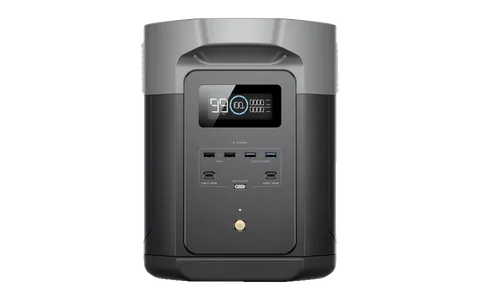
Cheapest in stock · Lowest price per Wh in stock · Largest in stock
EcoFlow DELTA 2 Max
2,048 Wh, 2,400 W output. $0.50 per Wh.
$1,029 at EcoFlow, Nov 23
Maker prices, Nov 23, 2026, unless dated. Checkout price applies. Stock is what each maker’s US store showed then; confirm it at the store. Compare all 23 stations or find one for your devices.
“Paid link” = we earn a commission. Same math either way. See how we make money.