EcoFlow · 3,763 Wh
EcoFlow DELTA 3800 Gen4: how long it runs
Runs an average US fridge for about 37.9 h, by our math.
- 3,763Wh
- 3,600W output
- 67.5lb
- $1,699price, Nov 23
The EcoFlow DELTA 3800 Gen4 costs $0.45 per Wh at $1,699 (Nov 23), tied #7 of the 23 stations here. By our math from EcoFlow’s specs, the DELTA 3800 Gen4 runs an average US fridge for about 37.9 h and a steady 100 W load for about 28.1 h.
How long does the DELTA 3800 Gen4 run your devices?
- Average fridge37.9 h70.4 W
- Modem + router5.3 days11 W
- 4 LED bulbs2.8 days34 W
- CPAP, humidifier on11.1 nights22 W
- Laptop2.1 days50 W
- Starlink Standard35.9 h75 W
- TV, 55 inch29.1 h96 W
- Electric blanket28.1 h100 W
- Microwave2.9 h1,100 W
Every number, with sources
Each device on its own: 3,763 Wh × 0.85 ÷ (watts + 14 W own draw). Several at once: add the watts, or use the planner.
Runtime at steady loads
| Load | Runtime |
|---|---|
| 50 W | 2.1 days |
| 100 W | 28.1 h |
| 200 W | 14.9 h |
| 500 W | 6.2 h |
| 1,000 W | 3.2 h |
| 1,500 W | 2.1 h |
3,763 Wh × 0.85 ÷ (load + 14 W).
Devices, one at a time
| Device | Draw | Runtime |
|---|---|---|
| Modem + router (NRDC) | 11 W | 5.3 days |
| 4 LED bulbs (Philips) | 34 W | 2.8 days |
| CPAP, humidifier on (ResMed) | 22 W | 3.7 days |
| Laptop (Virginia Tech) | 50 W | 2.1 days |
| Starlink Standard (Starlink) | 75 W | 35.9 h |
| TV, 55 inch (ENERGY STAR) | 96 W | 29.1 h |
| Electric blanket (Penn State) | 100 W | 28.1 h |
| Microwave (Penn State) | 1,100 W | 2.9 h |
Each on its own. Several at once: add the watts, or use the calculator.
Fridges
| Fridge | Average | Runtime |
|---|---|---|
| Efficient 18 cu ft (ENERGY STAR) | 42 W | 2.4 days |
| Average US fridge (EIA) | 70.4 W | 37.9 h |
| Large 26 cu ft (ENERGY STAR) | 80.8 W | 33.7 h |
From the specs
Suits
- A full day of an average fridge, or more: about 37.9 h.
- Kettles, coffee makers and most microwaves: 3,600 W output.
- Quick solar refills: about 2.5 sun hours with 2,000 W of panels, its input limit.
Look elsewhere for
- Carrying far: 67.5 lb.
- Buying today: pre-order; EcoFlow says it ships in mid-December 2026, without a date.
CPAP users: see CPAP nights on every station, with and without the humidifier, and follow your doctor’s and the device maker’s advice on backup power.
Tech specs
- Capacity
- 3,763 Wh
- Usable (× 0.85)
- 3,199 Wh
- Output
- 3,600 W
- Surge
- 7,200 W
- Own draw
- about 14 W
- Weight
- 67.5 lb
- Solar input
- 2,000 W
- Charging temp.
- 32°F to 113°F (0°C to 45°C)
- Use temp.
- 14°F to 113°F (−10°C to 45°C)
- Battery
- LiFePO4
- Warranty
- 3 years, plus 2 more when registered with EcoFlow
- Price, Nov 23
- $1,699
- $ per Wh
- $0.45
Sources and price details
Specs: EcoFlow product page. EcoFlow also lists 4,600 W as the maximum output with X-Boost. Own draw: EcoFlow’s product page lists 14 W with no load (3 W on standby), from its own tests. Solar: two inputs of up to 1,000 W each. Weight is EcoFlow’s “approx. 30.6 kg (67.46 lbs)”. EcoFlow says it expands to 12 kWh, with up to two DELTA Pro 3 or DELTA 3 Max Plus Smart Extra Batteries through its expansion adapter. Temperatures: EcoFlow US product page, read Nov 14, 2026. How we calculate.
Price details
Pre-order. $1,699 on EcoFlow’s US product page on Nov 23, 2026, under its Early Bird offer (list price $2,199); the early bird ends Dec 7, 2026. We read the page, not the cart, so check the price at checkout. EcoFlow says it ships in mid-December, without a date.
Starting motors and solar charging
7,200 W surge, per EcoFlow. Some fridges need two to three times their running power to start (Anker), some compressors two to four times (BLUETTI); check yours. Own draw: about 14 W (EcoFlow), included in every runtime here.
Solar: up to 2,000 W, about 2.5 sun hours to full by our math (see solar recharge time).
Nearest in size
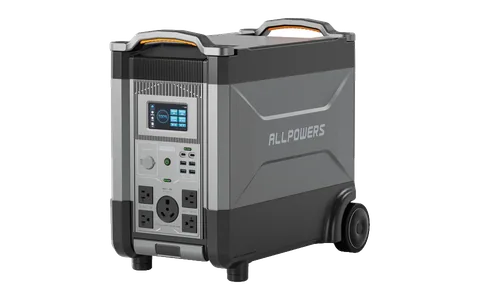
ALLPOWERS R4000
3,456 Wh capacity
$0.43 per Wh
ALLPOWERS price, Nov 23
EcoFlow DELTA 3000 Gen4
3,072 Wh capacity
$0.42 per Wh
EcoFlow price, Nov 23
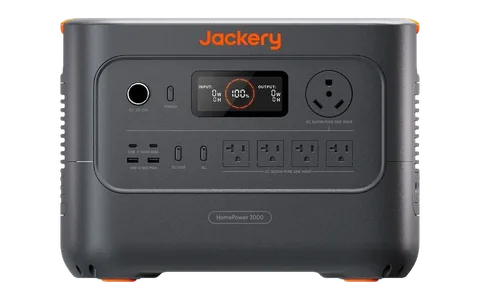
Check price at EcoFlow for the EcoFlow DELTA 3000 Gen4 at EcoFlowPaid linkJackery HomePower 3000
3,072 Wh capacity
$0.49 per Wh
Jackery price, Nov 23
Maker prices, Nov 23, 2026, unless dated. Checkout price applies.
Compare them in a table
| Station | Maker price | Capacity | $ per Wh | Output | Weight |
|---|---|---|---|---|---|
| EcoFlow DELTA 3800 Gen4 (this one) | $1,699 | 3,763 Wh | $0.45 | 3,600 W | 67.5 lb |
| ALLPOWERS R4000 (sold out) | $1,499 | 3,456 Wh | $0.43 | 3,600 W | 99.2 lb |
| Jackery HomePower 3000 (sold out) | $1,499 | 3,072 Wh | $0.49 | 3,600 W | 59.5 lb |
| EcoFlow DELTA 3000 Gen4 (ships in early January 2027) | $1,299 | 3,072 Wh | $0.42 | 3,600 W | 57.3 lb |
Maker prices, Nov 23, 2026, unless dated. Checkout price applies.
Quick answers
How long will the EcoFlow DELTA 3800 Gen4 run a refrigerator?
About 37.9 h for an average US fridge (70.4 W): 3,763 Wh × 0.85 ÷ (70.4 + 14 W own draw).
How long does the EcoFlow DELTA 3800 Gen4 take to charge from solar?
About 2.5 sun hours at 2,000 W by our math; longer in practice.
Can the EcoFlow DELTA 3800 Gen4 run a microwave?
Yes, if the microwave draws under 3,600 W. At 1,100 W: about 2.9 h.
Can the EcoFlow DELTA 3800 Gen4 run a CPAP?
By our math, about 11.1 nights of 8 hours for a ResMed AirSense 10 with the humidifier on (22 W), or about 19.0 nights of 8 hours with it off (7 W), on AC power. These are eight-hour nights with the station switched off in between; left on around the clock, its own draw uses more than the CPAP does. A DC cord from the CPAP maker skips the inverter. Follow your doctor’s and the CPAP maker’s advice on backup power.
Can the EcoFlow DELTA 3800 Gen4 run a space heater?
Only briefly. Heater makers and safety agencies say to plug heaters into a wall outlet, so check your heater’s manual first. By our math: about 2.1 h for a 1,500 W heater on high, or 4.2 h on a 750 W low setting.
Can the EcoFlow DELTA 3800 Gen4 run a window air conditioner?
A small one: about 6.9 h for a 5,000 BTU unit drawing 450 W nonstop, longer when the compressor cycles off. Its 7,200 W surge covers the start-up a generator maker plans for (4× running watts, about 1,800 W).
Can the EcoFlow DELTA 3800 Gen4 run a sump pump?
Yes: about 3.9 h nonstop for a 1/3 hp pump (about 800 W running), longer when it cycles. Its 7,200 W surge covers the usual 1,500–2,100 W start.
How long it runs: fridge · freezer · CPAP · Wi‑Fi · laptop · lights · TV · 12 V fridge · Starlink · blanket · microwave · heater · window AC · sump pump · gas furnace · well pump.
More in our guides: space heaters · window ACs · sump pumps · pellet stoves · cold weather · charging temperatures · charging time · what a 3,000 Wh station runs.
Keep comparing
For outages, see how it compares with a gas generator: power station vs generator, on where each can run and for how long.
“Paid link” = we earn a commission. Same math either way. See how we make money.